
Yes, Tinder is worth it in 2026 for wide dating reach and active users, but value depends on your location and goals.
In-depth reviewRecommended10 min read · Last updated Aug 26, 2026
Tinder Review 2026: Is Tinder Worth It, Safe, or Too Expensive?
Find Out Whether Tinder Is Still the Best Dating App for Casual Dating, Serious Relationships, and New Connections

Lena Voss
Independently reviewed · Fact-checked
Millions of people complain about Tinder every year, yet millions more continue to download it every month.
Here is something strange.
Tinder is the most popular dating app on the planet, used by around 75 million people a month, yet it holds one of the lowest public review scores you will find anywhere online.
On Trustpilot it sits at 1.1 out of 5.
On ConsumerAffairs it is a flat 1.0.
How does an app this huge keep that many people while making so many of them this angry?
That contradiction is exactly what makes Tinder worth a closer look in 2026. So in this Tinder review we set out to answer the two questions most people type into Google before they download it.
Is Tinder worth it in 2026, and is Tinder safe to use now that bots and scams keep making the news?
We spent weeks in the live app, dug through the pricing, the company's own financial reports, and thousands of real user reviews across every major site. Our take is a fair middle ground, not a fan rave and not a hit piece.
If you want the short answer first, our team at SpicyRanked rates Tinder a 7.5 out of 10. It still wins on size, but a thin free tier and pushy upsells hold it back.
Here is everything we found, with the real numbers to back it up.
Overall Summary
Overall Score 7.5 out of 10. Tinder is still the biggest dating app on Earth, and that size is its best feature. You will find people to match with almost anywhere.
The catch is a free tier that keeps shrinking and paid plans that now reach about fifty dollars a month at the top. It is great for casual dating and travel, and frustrating if you refuse to pay. It beats Bumble on sheer volume but trails it on match quality.
Rating Category | Score |
|---|---|
User Base Size | 9.5 / 10 |
Ease of Use | 9.0 / 10 |
Value for Money | 6.0 / 10 |
Privacy and Safety | 6.5 / 10 |
Match Quality | 7.0 / 10 |
Mobile Experience | 9.0 / 10 |
Overall | 7.5 / 10 |
What Is Tinder
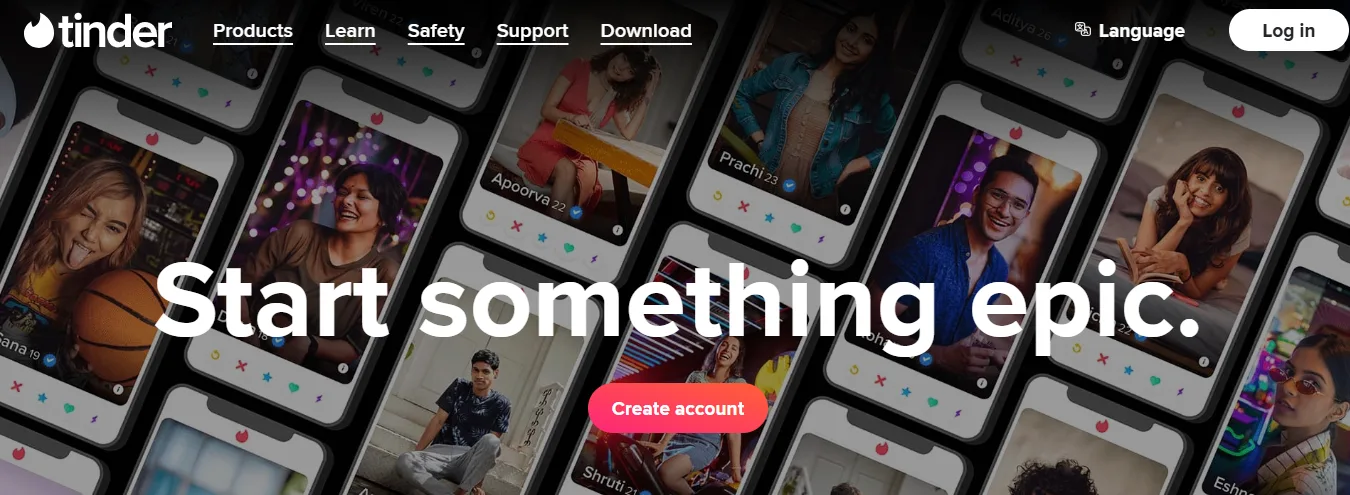
Tinder is a dating app where you look at one profile at a time and swipe right if you like someone or left if you do not. When two people both swipe right, you get a match and a chat opens. That swipe idea launched in 2012 and was so new at the time that the company trademarked it.
The app is owned by Match Group, the same company behind Hinge, OkCupid, and Match.com.
Tinder is the biggest brand in that group and brings in most of its money. In the first quarter of 2026, Match Group reported that Tinder made 455 million dollars in direct revenue, which shows just how large the business still is.
Here is Tinder in plain numbers, using company filings and trusted industry data.
Around 75 million people use Tinder each month, the largest pool of any dating app.
It is available in more than 190 countries and over 40 languages.
Tinder reported about 8.6 million paying users in early 2026, more than any rival.
Roughly 1.5 million users go on a date through the app each week.
About three out of four users are men, which shapes the experience for everyone.
It launched in 2012 and is still the most downloaded dating app in the world.
How Is Tinder Different From Other Dating Apps
The honest answer is speed and size.
Tinder strips dating down to a photo, a short bio, and a quick yes or no. There are no long personality quizzes like eHarmony and no women message first rule like Bumble.
You see a face, you decide, you move on. That simple design is both why people love it and why people criticize it.
Hinge sells itself as the app you delete once you find someone and leans on detailed prompts.
Bumble lets women send the first message.
Tinder bets on giving you the widest net and letting you sort through it yourself.
For a closer look at how the two stack up, our Bumble review covers the quality versus quantity tradeoff in detail.
Key Features of Tinder
Tinder packs a lot into a simple screen. Some features are free and some sit behind a paywall, which we flag below so there are no surprises.
Swipe matching. The original right for yes and left for no. Fast, simple, and copied by almost every rival since.
Super Like. A special alert that tells someone you really like them before they swipe on you. Free users get one a day, paid users get more.
Passport. Change your location to any city in the world. Handy for travel or moving. This is a paid feature.
Top Picks. A daily set of profiles the app thinks suit you. The full version is paid.
Photo verification. You take a pose matching selfie to earn a blue check. It cuts down on fake profiles but does not stop them all.
Chemistry. At its March 2026 keynote, Tinder launched an AI feature called Chemistry that studies how you swipe to suggest better matches. It is the app's biggest change in years.
The move toward AI is worth watching. Match Group has paired Chemistry with stronger face verification to fight bots and fake accounts, two of the loudest complaints from users.
Whether the new matching actually feels better is still an open question, since the marketing and the day to day reality on dating apps rarely line up.
Strengths and Weaknesses Of Tinder
No app is all good or all bad, and Tinder proves it. Its strengths are real and so are its flaws. Here is the balanced view from our testing and research.
What We Like
The largest user base anywhere, so you can find matches almost everywhere.
Available in 190 plus countries, which is ideal for travel and new cities.
The swipe screen is easy and everyone already knows how it works.
Polished apps that run smoothly on both iPhone and Android.
Strong brand name, so most single people already have an account.
What to Watch
The free tier is now tight, with a daily cap on likes.
Paid plans reach about fifty dollars a month at the top tier.
Many users feel the app hides free profiles to push paid upgrades.
Lots of matches, but many never turn into a real conversation.
Reports of sudden bans and slow support show up often in reviews.
The biggest plus is hard to oversell. Open Tinder in a big city and you are not hoping for activity, you are buried in it. That density is exactly why the app keeps its crown while rivals chip away at it. It also leads to real relationships, not just casual flings.
The Pew Research Center has tracked how online dating went from a fringe thing to a normal way couples meet, with a real share of adults saying they started a serious relationship with someone they met on an app.
You can read the full breakdown in the Pew Research Center study on online dating. As the biggest app, Tinder sits right in the middle of that shift, which is a useful answer to the hookup app label it cannot shake.
Who Tinder Is For and Who It Is Not For
Tinder is not right for everyone, and saying so is more useful than pretending it works for all. Here is how we see the fit.
Tinder Works Best For
People in new cities or traveling who want a big dating pool right away.
Casual daters who care more about lots of options than careful matching.
Social users who just want the most popular and well known dating app.
Younger daters aged 18 to 34, who make up most of the user base.
Tinder Is Not Ideal For
People who want quality matching with less noise, where Bumble or Hinge fit better.
Daters on a tight budget who do not want to pay for extras.
Anyone who finds endless swiping draining instead of fun.
Users who want fast, helpful support when something goes wrong.
If you land in the second group, that does not mean dating apps are off the table. It just means a different app may suit you better than the swipe first model.
Many people try two or three apps before they find the one that fits how they actually date, and there is nothing wrong with treating Tinder as a starting point rather than the final stop.
Tinder Pricing in 2026
Tinder is free to download, and you can match and chat without paying. The free tier has tightened over the years though, with a daily cap on likes and just one Super Like a day.
To remove those limits you move to a paid plan, and there are three main ones.
Plan | Typical Monthly Price | Main Perks |
|---|---|---|
Tinder Plus | About 8 to 30 dollars | Unlimited likes, Passport, Rewind, no ads |
Tinder Gold | About 25 to 45 dollars | Everything in Plus, plus See Who Likes You and Top Picks |
Tinder Platinum | About 30 to 55 dollars | Everything in Gold, plus Priority Likes and Message Before Matching |
Two things matter here.
First, six month and twelve month plans cut the monthly cost a lot, often close to half.
Second, Tinder uses dynamic pricing, so your price changes based on age, location, and ongoing tests.
Tinder Platinum, for example, typically costs between 30 and 55 dollars a month depending on your location, age, and how long a plan you commit to.
Match Group even said its early 2026 results took a small revenue hit from these user experience tests, which tells you how often the company experiments with what you pay. Users under 30 often see lower prices than older users for the same plan.
Tinder Plans and Features Compared
Pricing is only half the picture. What you actually unlock at each tier matters more, so here is the full feature breakdown straight from Tinder's official subscription page.
Each tier includes everything from the tier below it, then adds a few extras on top.
Feature | Tinder Free | Tinder Plus | Tinder Gold | Tinder Platinum |
|---|---|---|---|---|
Match, Chat, Meet | Yes | Yes | Yes | Yes |
Unlimited Likes | No | Yes | Yes | Yes |
Unlimited Rewinds | No | Yes | Yes | Yes |
Passport to Any Location | No | Yes | Yes | Yes |
Hide Advertisements | No | Yes | Yes | Yes |
Go Incognito | No | Yes | Yes | Yes |
Weekly Super Likes | No | No | Yes | Yes |
1 Free Boost a Month | No | No | Yes | Yes |
See Who Likes You | No | No | Yes | Yes |
Message Before Matching | No | No | No | Yes |
Prioritized Likes | No | No | No | Yes |
One note on that free Boost. It is only available on plans of one month or longer, and some Gold subscribers may not receive it during testing.
Super Likes and Boosts also expire if you do not use them, so they are a perk you have to stay active to get full value from. That pricing approach has drawn criticism.
Dating apps collect a lot of personal data, and how they use it for both matching and money has become a privacy concern.
The Mozilla Foundation has flagged dating apps in its consumer privacy research, and you can read its findings in the Mozilla privacy report on dating apps.
The point for our pricing score is simple.
You pay with money and with data, and both belong in the cost.
So is Gold worth it?
For active daters in busy cities, seeing who already liked you saves real time, and that is the main reason people upgrade.
Platinum adds priority placement and messaging before matching, but the jump in value is smaller than the jump in price.
Plus is the budget pick that mainly buys unlimited swipes and Passport.
A good rule is to never buy the top plan first. Start free, see how busy your area is, then climb the ladder only if the numbers justify it.
The Tinder Sign Up Process
Getting started takes only a few minutes, which is part of why Tinder grew so fast. Here is what it looks like in 2026.
Download the app and pick a sign up method, usually a phone number, Google, or Facebook.
Confirm a code to verify your account, which keeps obvious bots out at the door.
Take a pose matching selfie for photo verification to earn the blue check.
Add your photos, since these carry most of the weight in whether people swipe right.
Write a short bio that gives people a reason to start a chat.
Set your preferences for age, distance, and who you want to see.
Start swiping and reply to matches as they come in.
The verification step has grown stricter, and that is mostly good for safety.
The downside is that some users say they get asked to verify again and again, and sometimes get locked out while they wait. It is a common complaint across review sites, so it is worth knowing before you spend time on a profile.
To see how this setup compares with competitors, our library of platform reviews walks through each app in the same way.
How SpicyRanked Rates Tinder
Our 7.5 is not just our own opinion. We weigh it against what thousands of real users say across the major review sites, plus our own time in the app.
The picture those reviews paint is far more critical than the app store stars alone, so here is the full breakdown by source, followed by how we turned it all into a score.
Trustpilot Reviews
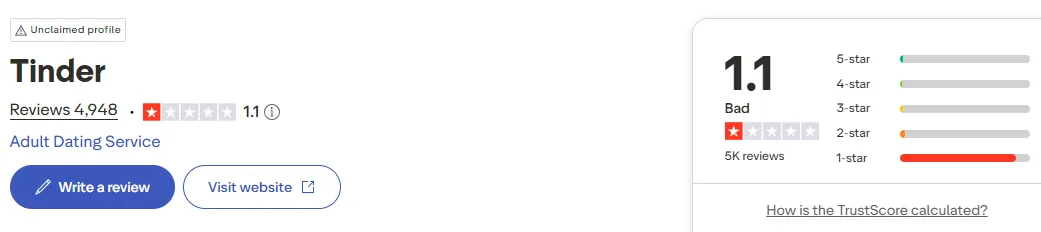
This is where Tinder looks roughest. On Trustpilot the app sits at about 1.1 out of 5 across 4,948 reviews, with roughly 89 percent giving it a single star.
Worth noting, the Tinder profile on Trustpilot is unclaimed, meaning the company has not stepped in to respond to complaints there. The reviews repeat the same themes over and over.
Users describe sudden bans with no clear reason, appeals that go nowhere, and paid features that stop working after they pay. A common one is being charged while feeling the promised visibility never showed up. Fake profiles and bots come up in a large share of recent complaints too.
For context, Trustpilot draws people who are upset enough to write a review, which is why most dating apps score low there. Even so, the sheer volume of the same issues is a signal we take seriously.
Google Play Store Reviews
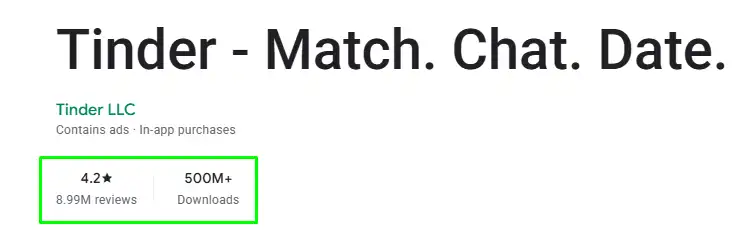
On Android the picture is more mixed but still uneven. Tinder holds a 4.2 star rating from about 8.99 million reviews on the Google Play Store, with more than 500 million downloads to date.
That high star average reflects its huge install base, where happy users rarely review and frustrated payers often do. The same themes appear, including verification loops, billing confusion, and worries about how visible free profiles really are.
The good Play Store reviews tend to praise the smooth app and the size of the dating pool, which matches our own testing. The bad ones almost always involve money, moderation, or bans, not the swiping itself.
Apple App Store Reviews
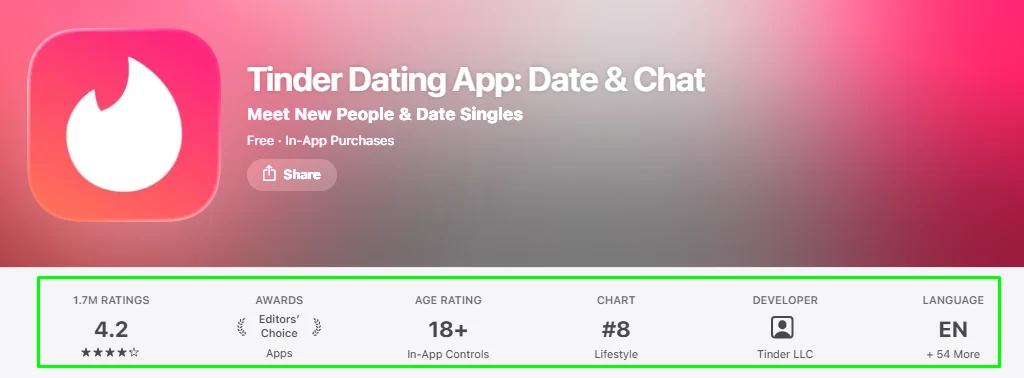
Apple is where Tinder looks strongest. On the US App Store the app holds a 4.2 star rating from more than 1.7 million ratings, and it carries an Editors Choice badge. That is a strong score for an app this large and this watched.
The gap between a 4.2 on Apple and a 1.1 on Trustpilot tells its own story, and it is the most interesting thing about Tinder as a brand. A platform can dominate the entire dating market and still carry one of the lowest public review scores online.
Most everyday users find the app pleasant enough to rate well in passing on the app stores. The people who feel burned by billing or hit with a ban go to dedicated review sites to vent at length. Both things are true at once, and our score tries to hold them together rather than pick a side.
ConsumerAffairs Reviews
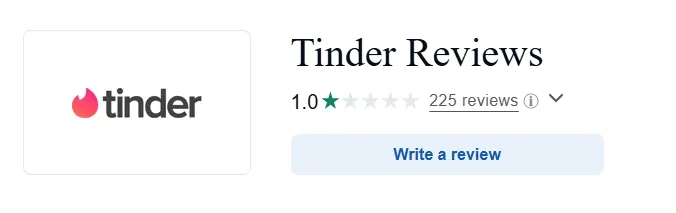
ConsumerAffairs leans negative as well, with a 1.0 rating across 225 reviews. They are full of billing disputes, repeated verification failures, and bans with no explanation.
A frequent and serious complaint is bots and scam profiles slipping past moderation. That last point deserves real weight, because it is not just annoying, it is a safety issue. Romance scams that start on dating apps cause huge financial harm every year.
The US Federal Trade Commission tracks these losses, and its data shows people report losing very large sums to romance scams. You can see the figures in the FTC data spotlight on romance scams.
Tinder is not alone here, but as the biggest app it is a prime hunting ground, which is why its moderation gaps matter so much.
What Reddit Users Say
Reddit is where people speak the most bluntly, so it is a good gut check on the marketing. The mood in 2026 is best described as loyal but tired.
The most common gripe is what users call the pay to play model. Many say they get a healthy run of likes early, then watch it dry up after a few weeks, with prompts to buy a Boost or upgrade appearing right as it fades.
Whether that is a real throttle or just the novelty wearing off is hotly debated, but the feeling itself is nearly universal.
Men report a hard time with low match rates, while women report being flooded and then sifting through low effort messages. That imbalance is a recurring theme and fits the heavily male user base.
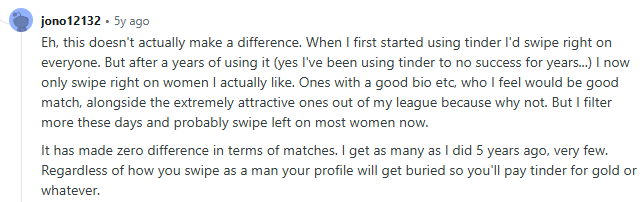
On the upside, plenty of users still credit Tinder with real dates and relationships, and many call it the most usable free option despite its flaws.
The honest consensus is that Tinder works, but you have to manage your expectations and your wallet.
How We Turned This Into a Score
We score six things, then balance our live testing against all the public reviews above.
The six are user base, ease of use, value, privacy and safety, match quality, and mobile experience.
Tinder earns its high marks on size, ease of use, and mobile polish, where it is genuinely class leading.
It loses points on value, since pricing has climbed past what you get, and on privacy and safety, where moderation gaps and ban complaints are too common to ignore.
Match quality lands in the middle, strong on volume and weak on turning matches into real chats. That match quality issue is not just anecdotal.
Research into swipe based dating has shown how the format can drive compulsive use and burnout, with a gap between the rush of matching and the satisfaction of actually connecting.
Is Tinder Getting Better in 2026
There are real signs of a turnaround worth flagging.
In its early 2026 results, Match Group said Tinder's new user sign ups returned to year over year growth in March, the first such rise in almost two years. The app's monthly user decline also slowed to 7 percent, the smallest drop in 31 months.
The company has leaned into AI matching with Chemistry and stronger identity checks to rebuild trust. None of this fixes the pricing complaints overnight, but it does suggest the app is being actively repaired rather than left to coast, which we view as a small positive for new users deciding whether to commit.
It is also a reminder that the app you download today is not the same one people reviewed a year ago, so older complaints may not fully reflect the current experience.
Final Verdict
7.5
7.5/10
Recommended
Tinder in 2026 is a powerful tool with a frustrating pricing model wrapped around it. The product itself, the swiping, the smooth app, and the sheer reach, is still the best in the category.
The experience of being a free user, and more and more a paying one, is where the shine comes off. None of that erases what the app does well, but it does explain why long time users sound worn down even as they keep swiping.
If you want maximum options, especially while traveling or in a new city, nothing matches Tinder's size, and it earns its 7.5. If you want curated, quality first matching with less noise, Bumble or Hinge are the more deliberate choice.
Our advice is to start free, keep your expectations real, and only pay once you are sure the app is delivering matches worth chasing. Treat the paid tiers as a convenience, not a cure for a weak profile, since better photos and a real opener move the needle far more than any subscription.
Frequently Asked Questions
Yes, Tinder is generally safe to use if you use in-app safety tools and meet matches in public with basic caution.
Yes, Tinder is free to use, with optional paid upgrades for extra features and visibility.
Tinder costs vary by plan, roughly Plus around 8 to 30 dollars, Gold around 25 to 45 dollars, and Platinum around 30 to 55 dollars per month.
Yes, Tinder Gold is worth it for frequent users who want to see likes and save time, but not necessary for casual dating.
Tinder Platinum is worth it mainly for serious users who want more visibility and priority messaging, but it is not essential for everyone.
Tinder has bad reviews mainly due to fake profiles, match inconsistency, pricing complaints, and uneven user experiences.
Yes, Tinder does have some bots and fake profiles, though the app actively tries to remove them.
Yes, you can get banned from Tinder for violating rules, and sometimes accounts get flagged by mistake.
Tinder is better for quick matches and reach, while Bumble focuses more on conversation control and intent-based dating.
Tinder is better for casual dating, while Hinge is better for serious relationships and deeper connections.
Best Tinder alternatives include Hinge, Bumble, and OkCupid depending on whether you want serious or casual dating.
Written by
Lena Voss
Lena Voss reviews adult dating, cam, and platform sites for SpicyRanked. Her goal is simple: help you decide if a site is worth paying for before you hand over your card. She reads the billing terms and cancellation policy first, because that is where these platforms hide the costs. Her reviews cover the things that matter most, real prices, pushy upsells, whether the user numbers are honest, and how each site protects your privacy. When a platform is good, she says so. When it is not, she tells you plainly. No hype, just a clear answer you can trust.
Meet the team →Editorial standards. SpicyRanked is for adults 18+ only and may earn affiliate commissions at no extra cost to you; our editorial reviews remain independent.